The automation paradox: telecoms wants autonomous networks, but still does not trust autonomous decisions
The automation paradox: telecoms wants autonomous networks, but still does not trust autonomous decisions
Artificial Intelligence is increasingly cast as the villain of the labour market. That is too simple, and it lets organisations avoid the harder question. The problem is not AI, it is the adoption itself.
Telecoms has become very comfortable talking about autonomous networks.
The industry talks about AI-enabled operations, closed-loop automation, self-healing networks and intelligent service assurance. The ambition is clear: networks should be able to detect problems, understand what caused them and act before customers feel the impact.
It is a compelling vision. It is also not quite where most operators are today.
The uncomfortable truth is that telecoms wants the benefit of autonomous networks, but still struggles to trust autonomous decisions.
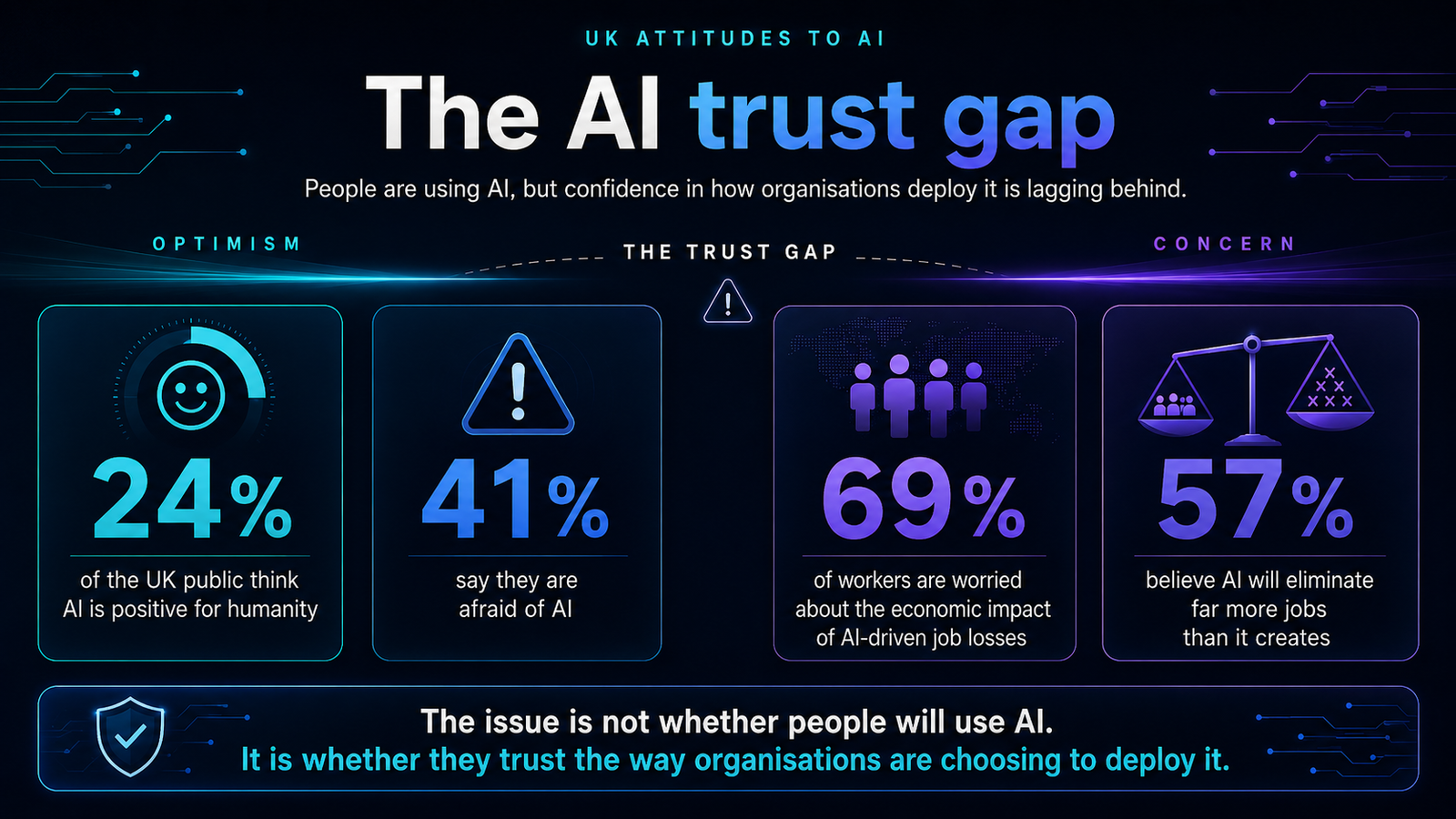
Findings from King's College London show there is a trust issue with AI
Findings from King's College London show there is a trust issue with AI
The trust gap is real
The trust gap is real
That hesitation is not irrational.
Telecoms networks are not ordinary IT environments. They support consumers, businesses, public services, emergency communications and critical national infrastructure. When something goes wrong, the consequences can be immediate and visible.
A bad automated decision is not just a technical mistake. It can create service disruption, increase customer complaints, trigger regulatory scrutiny and leave engineering teams trying to unwind a problem they did not directly create.
So operators are right to be careful.
But caution becomes a problem when it leaves the industry stuck in the middle. Not fully manual. Not genuinely autonomous. Just buried under more systems, more alerts, more dashboards and more recommendations.
That is the automation paradox.
Operators want AI to reduce pressure on their teams. But if it is not designed properly, AI can simply move the pressure somewhere else.
More intelligence can still create more work
More intelligence can still create more work
The industry often assumes that adding intelligence automatically makes operations easier.
That is not always true.
An AI system that detects more issues but does not prioritise them creates more noise. A platform that recommends actions but cannot explain its reasoning creates more doubt. A dashboard that shows more data but does not connect it to service impact creates more work for the people using it.
This is where automation can quietly underperform.
It does not fail dramatically. It fails by being half-useful.
It flags something important, but an engineer still has to check three other systems. It groups alarms, but the root cause is unclear.
It recommends an action, but nobody is confident enough to approve it quickly. It promises speed, but the operating model still depends on slow human interpretation.
That is not transformation. It is a more expensive queue.
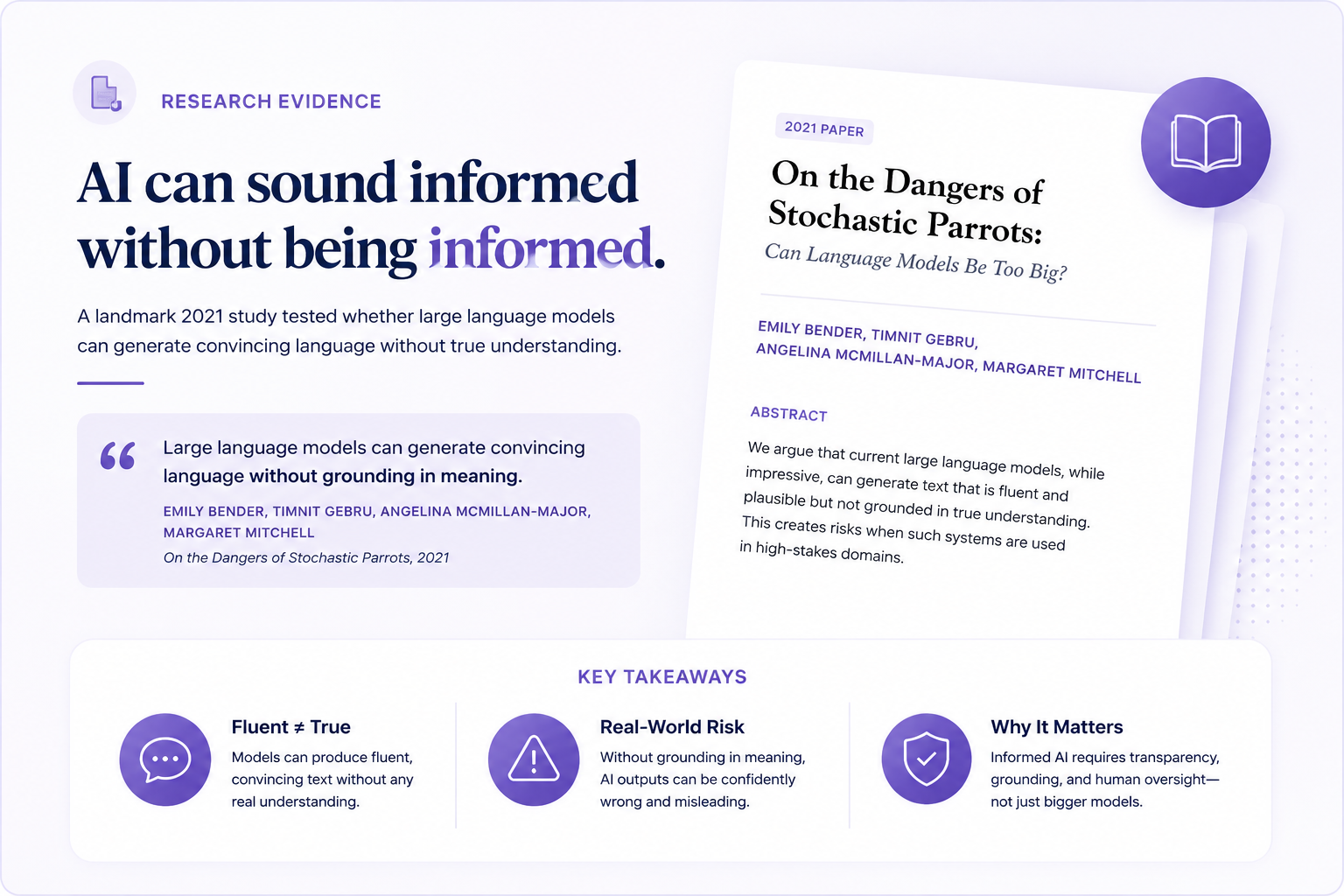
In the 2021 paper “On the Dangers of Stochastic Parrots,” Emily Bender, Timnit Gebru, Angelina McMillan-Major, and Margaret Mitchell argued that large language models can generate convincing language without genuine grounding in meaning
In the 2021 paper “On the Dangers of Stochastic Parrots,” Emily Bender, Timnit Gebru, Angelina McMillan-Major, and Margaret Mitchell argued that large language models can generate convincing language without genuine grounding in meaning
The question is not what can be automated
The question is not what can be automated
The better question is not: can this process be automated?
In many cases, the answer will eventually be yes.
The better question is: what level of trust is required before the system is allowed to act?
Some actions are low-risk. They can be automated quickly and safely. Others should require human approval. Some should remain advisory because the commercial, operational or customer impact is too significant.
This distinction matters.
Automation is not one big switch. It is a set of decisions about confidence, risk and control.
A mature operator should know which actions can happen automatically, which need supervision and which should escalate to a specialist. Without that structure, AI remains trapped in a vague space between “interesting recommendation” and “trusted operational tool”.
That is where many programmes lose momentum.
Trust has to be designed
Trust has to be designed
Trust is often treated as a cultural issue.
People say teams need to become more comfortable with AI. They talk about mindset, adoption and change management. Those things matter, but they are not enough.
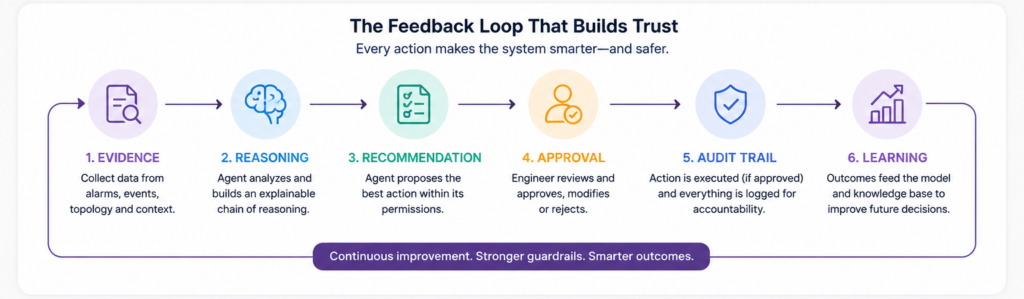
In telecoms operations, trust has to be designed into the workflow.
Engineers need to know why a system has made a recommendation. They need to see which alarms are related, which customers or services are affected and what evidence supports the proposed action.
Operations leaders need audit trails. They need approval gates. They need rollback options. They need clear rules for escalation. They need to know where automation starts, where it stops and who remains accountable.
That is not bureaucracy. That is how AI becomes usable in a high-stakes environment.
The operators that get this right will not be the ones that simply automate the most. They will be the ones that automate with the most discipline.
The future is supervised intelligence
The future is supervised intelligence
The strongest model for telecoms is unlikely to be fully manual or blindly autonomous.
It will be supervised intelligence.
AI should reduce the burden on human teams. It should connect fragmented signals, identify patterns, prioritise incidents and recommend the next best action. It should help engineers move faster with better context.
But humans still need to set the boundaries.
They decide what the system is allowed to do. They define the risk levels. They approve the sensitive actions. They review the outcomes. They improve the rules over time.
That is the practical path to autonomous operations.
Not a leap of faith. Not another dashboard. Not a marketing slogan wrapped around a workflow that still depends on exhausted engineers doing the hard part manually.
Autonomy needs confidence, not hype
Autonomy needs confidence, not hype
The next phase of telecoms automation will not be won by the operators with the boldest language.
It will be won by the operators that can build confidence into every decision.
Because the real prize is not a network that acts alone. It is an operating model where AI and human expertise work together so clearly that teams know when to trust, when to challenge and when to intervene.
That is how automation becomes more than ambition.
That is how it becomes operational reality.
Sarah Vance
CEO, Vernex Networks
Sarah Vance
CEO, Vernex Networks
Find out how The Content Store can bring your stories to life