
Vernex Interview
THE CONTENT STORE APPROACH
Every piecve of content has a purpose
Show the thinking behind the strategy in a more human, conversational format that builds familiarity and trust.
It lets the executive explain priorities, decisions and beliefs in their own voice, without the formality of a traditional article.
It creates quotable material for social, internal comms, sales decks, newsletters and future long-form content. Pull out the strongest quotes, turn them into social cards, feature them in newsletters and use them as proof of leadership perspective.
Optimistic about AI
That's why she refuses to worship it
An Interview with Sarah Vance
Vernex CEO on telecoms complexity, expensive theatre and why automation has to earn trust
Sarah Vance has a useful habit for a technology CEO. She does not sound overly impressed by technology.
This attitude is not cynical, far from it. The Vernex Networks CEO is convinced AI will reshape telecoms operations over the next decade. She believes automation will help operators move faster, resolve faults earlier and give skilled engineers more room to do valuable work. B
ut she is also wary of what happens when companies confuse adoption with progress.
“AI is not a strategy,” Vance said. “It is a capability.
“If you attach it to a clear operational problem, it can be incredibly powerful. If you attach it to a vague ambition, it becomes expensive theatre.”
It is a line that captures Marwick’s view of the market. She is optimistic about AI, but only when it is treated with discipline. She wants companies to move faster, but not blindly. She wants automation to scale, but not at the cost of accountability. In an industry increasingly surrounded by noise, it is a refreshingly adult position.
From network pressure to operational clarity
Vance’s career began close to the engineering floor. After studying electrical engineering, she joined a European mobile operator as a graduate radio planner before moving through service assurance, operations strategy and transformation roles. She later advised fixed and mobile operators on resilience, automation and large-scale network change.
That experience has shaped the way she runs Vernex.
“I have always been interested in the gap between what technology can theoretically do and what an organisation can actually use,” Vance said. “That gap is where a lot of transformation programmes get into trouble.”
Vernex sits directly inside that gap.
Every agent needs a permission model
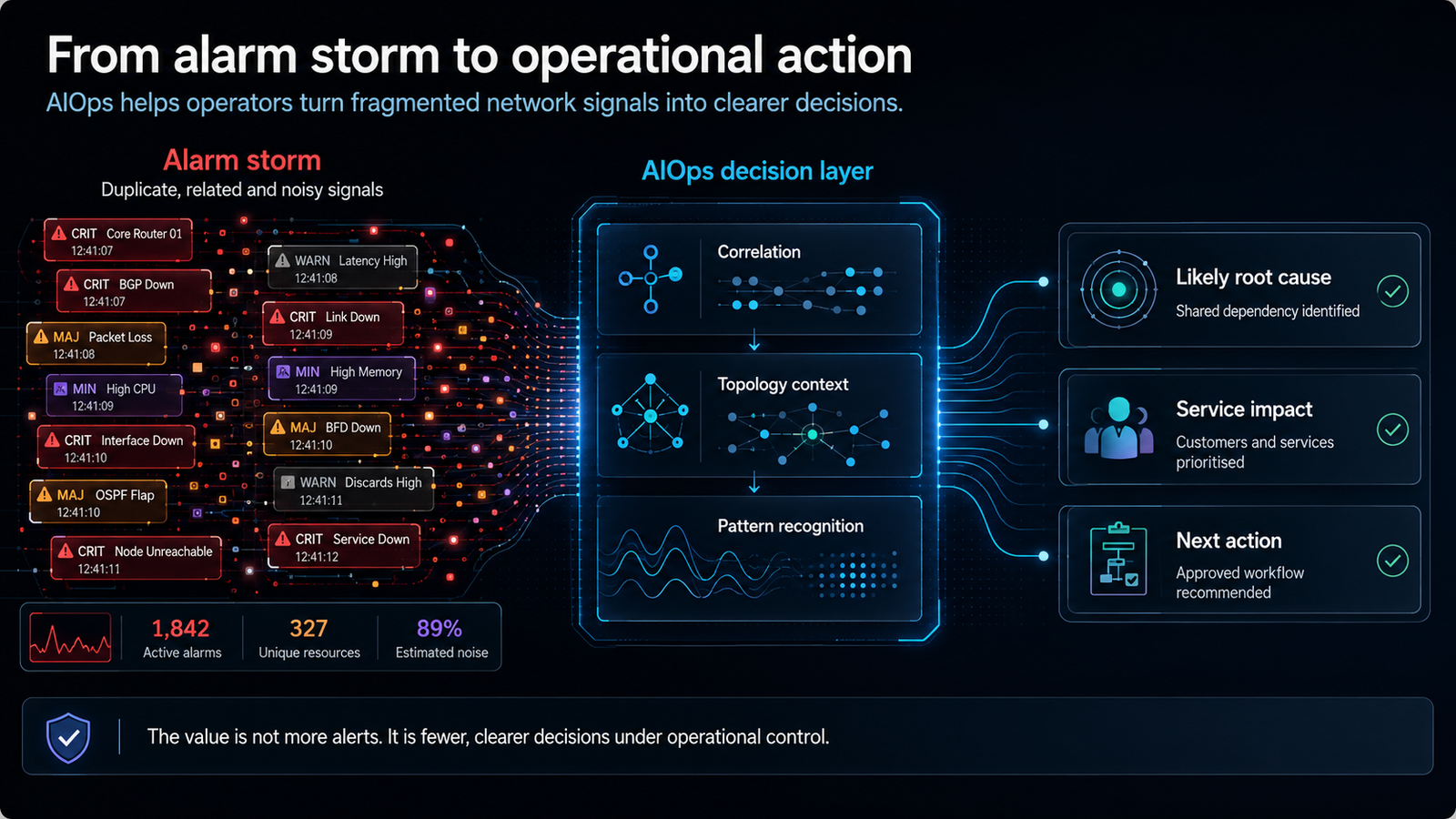
The company builds AI-assisted automation tools for telecoms operators, focused on event correlation, workflow automation and operational insight. In simple terms, it helps teams make better sense of network incidents: which alarms are connected, what the likely root cause is, which services are affected and what should happen next.
Vance describes the mission more plainly.
“We help engineers get from noise to judgement faster.”
That matters because telecoms networks are quickly becoming incomprehensibly complex. Operators are dealing with more technologies, more vendors, more customer expectations and more service dependencies. The issue is not that they lack data. It is that the data arrives in fragments.
One fault can create alarms across multiple sites. Those alarms can generate duplicate tickets. Different systems can tell different parts of the story. By the time an engineer has pieced it together, precious minutes have already gone. In an industry increasingly surrounded by noise, it is a refreshingly adult position.


People often say the answer is more visibility.
But visibility is not the same as clarity. You can show someone ten dashboards and still leave them with no idea what decision to make.
Sarah Vance
CEO, Vernex Networks
The problem with AI theatre
What makes Vance persuasive is that her realism does not sound defensive. She is not trying to slow the industry down. She is trying to stop it wasting time.
Her argument is that telecoms needs AI precisely because the pressure on operations teams is rising. The old model of more alarms, more tickets, more dashboards and more manual triage cannot carry the industry forever.
But the answer cannot be another layer of complexity pretending to be transformation.
“Automation should make good people better,” Vance said. “It should give engineers time back. It should help them focus on the incidents that matter. It should reduce avoidable stress. And it should improve the quality of operational decisions.”
That human emphasis runs through her leadership style. Colleagues describe her as direct, calm and unusually good at asking basic questions that expose weak thinking. What problem are we solving? Who makes the decision? What evidence do they need? What happens if the system is wrong?
“They sound simple because they are simple. That is why people skip them.”
For Vernex, those questions are becoming commercially important. Operators do not need more AI theatre. They need practical systems that help them manage real complexity with more confidence and less noise.
Vance’s optimism is real. It just has its sleeves rolled up.
“The future is not humans versus AI. That is the lazy version of the story. The better question is how we design AI that helps people make sharper decisions, faster, with more confidence.”
That is the kind of optimism Vernex is betting on. Not blind faith. Not fashionable language. Not expensive theatre. Just better judgement, better tools and AI that proves its value in the places where the pressure is highest
The future is not humans versus AI.
That is the lazy version of the story.
The better question is how we design AI that helps people make sharper decisions, faster, with more confidence
Sarah Vance
CEO, Vernex Networks
Bring us the raw thinking
And we'll turn it into a content marketing plan which engages across different platforms and audience profiles
Tell us the idea
And we'll show you how you can layer the argument, build in redundancy, and support other channels